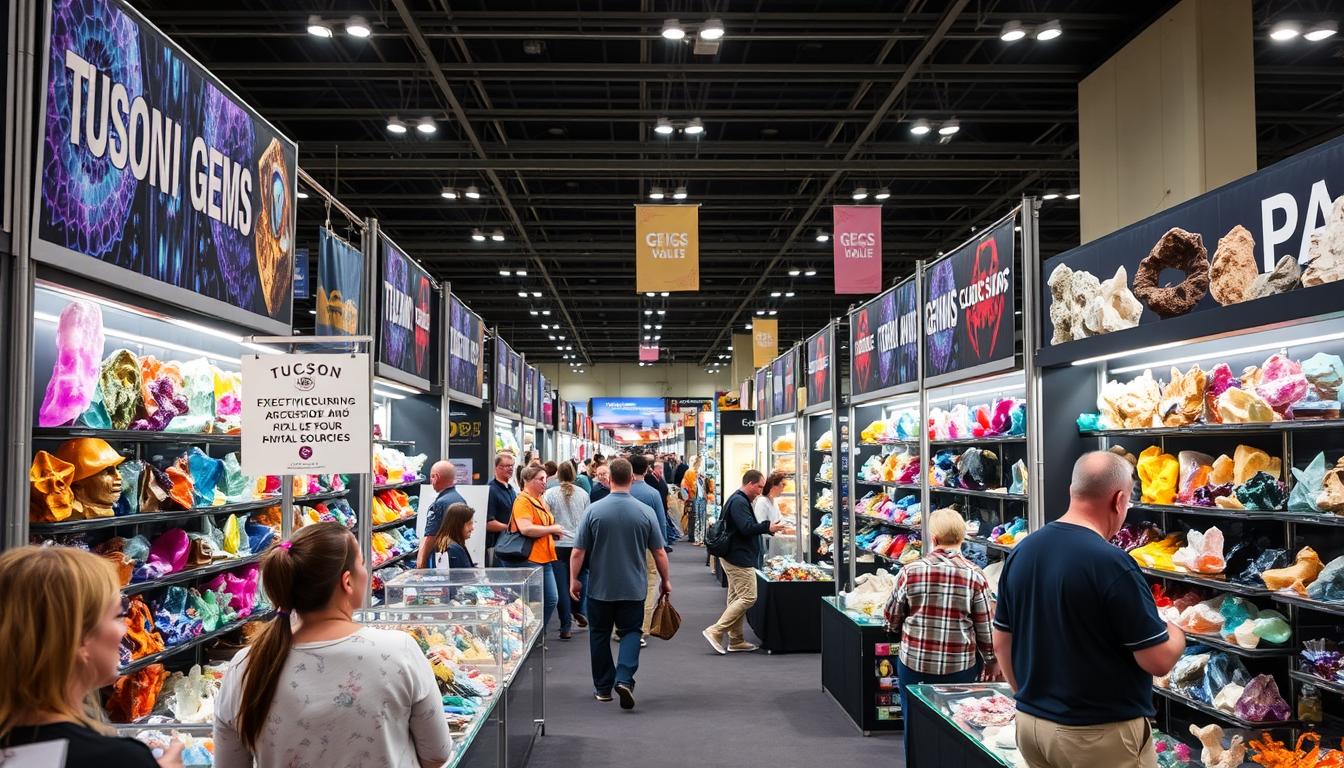

My hands tremble as I inspect a piece of smoky quartz under the fluorescent lights of the Tucson Gem Show. I’m supposed to be treasure-hunting for my customers, armed with a detailed shopping list and ethical sourcing criteria. Instead, I’m questioning everything about my business and my place in this industry. What began as a confident gem-shopping expedition has transformed into an existential crisis that has me ready to walk away from it all.
The Tucson Gem Show – where my journey with ethical sourcing in the gemstone industry took an unexpected turn
The Moment Disillusionment Hit
It all started at the booth of a major supplier – one of the “big guys” in the industry. While I prefer working with smaller operations, this particular source offers good quality tumbled stones at competitive prices. As I’ve done every year, I asked questions about sourcing and treatments while making my selections.
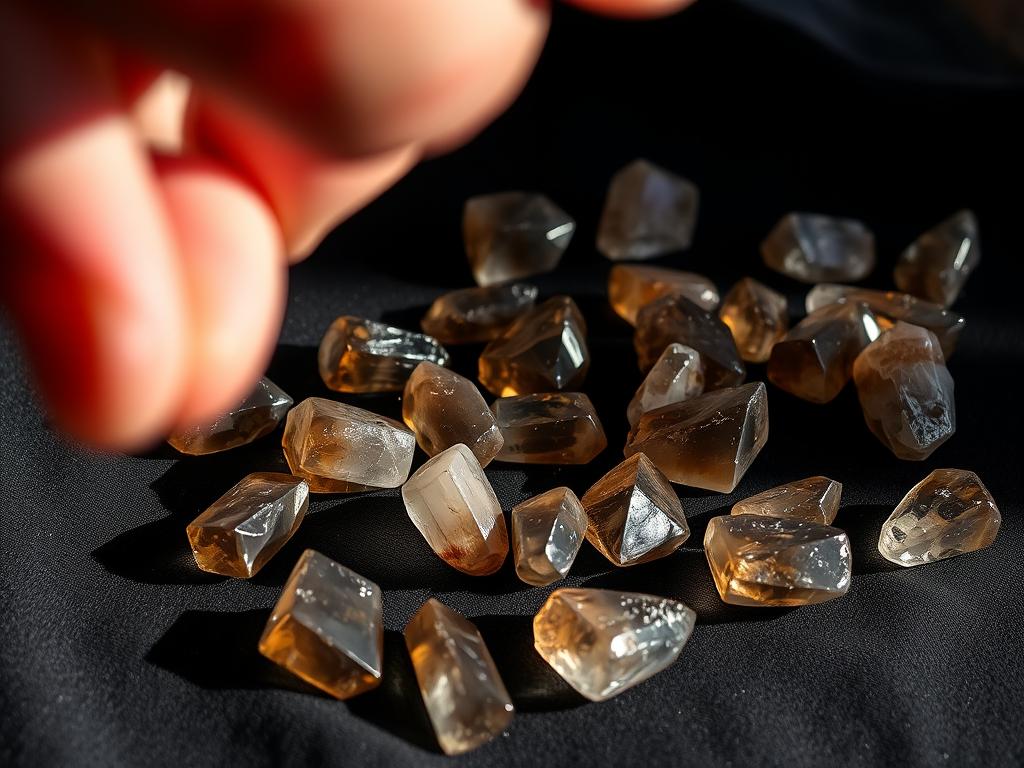
While finalizing my purchase, I remembered to verify something about their dark smoky quartz. “Is this smoky natural or treated?” I asked – a standard question in our industry that any vendor should expect.
The man behind the counter looked me up and down. I could see his assessment: petite, female, probably into crystal healing. His sigh was audible before he replied with undisguised contempt:
“What answer do you want to hear?”
I stood frozen, shocked by his blatant dishonesty. “The truth,” I managed to reply. He placed his hand over his heart and promised the stones were natural – correctly guessing the answer I wanted. I didn’t believe him for a second.
Walking away, I felt a heaviness that went beyond that single interaction. This wasn’t just one snarky remark – it represented everything wrong with the gemstone industry. The secrecy. The lies. The belief that only money matters. Did I really want to be part of this world?
When "Energy" Trumps Ethics
Later that day, I encountered a second situation that deepened my disillusionment. A friend who owns a healing crystal store invited me to check out some “Lemurian Seed Crystals” from one of her suppliers.
When the seller unveiled them, my friend and her companions immediately began picking up stones, oohing and aahing over their “energy.” I remained quiet, hands firmly in my pockets. At one point, the seller mentioned, “These are from the Andes, the best quality in the world.” No one seemed particularly interested in this detail – the Andes simply sounded suitably spiritual and exotic.
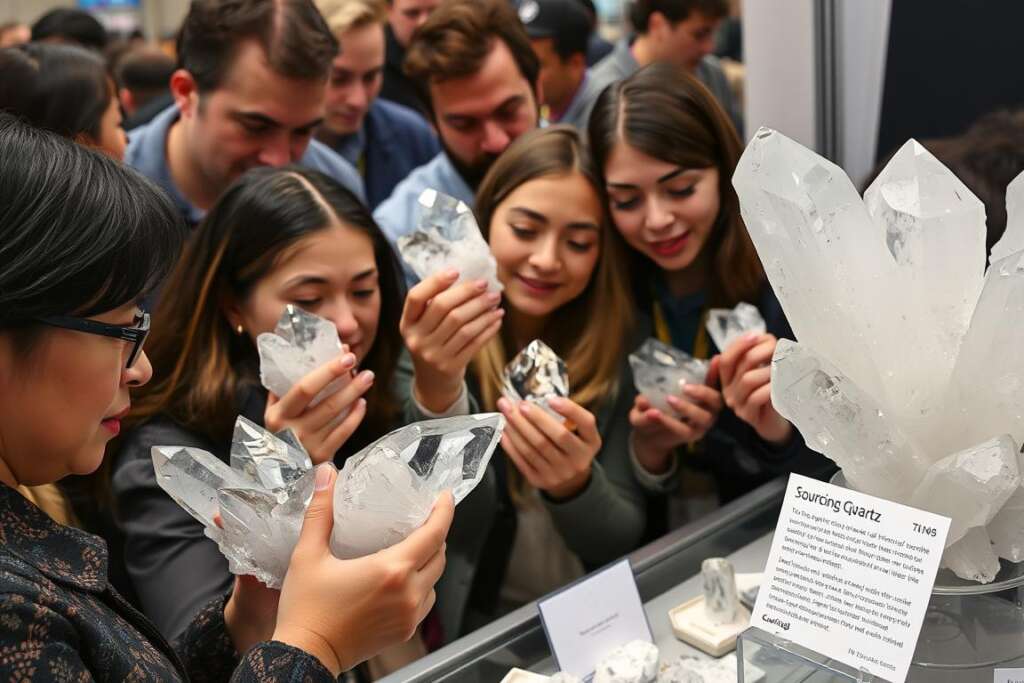
As they haggled on price and made their deal, I found myself wondering about the miners in the Andes. How many hands had these crystals passed through? What were the working conditions like? Why did I seem to be the only person who cared?
This second encounter highlighted another troubling aspect of the crystal community. We constantly talk about energy, compassion, and transformation, yet often shy away from asking difficult questions about the human and environmental costs behind our beautiful stones.
The Breaking Point
Standing in the middle of the world’s largest gem show, I felt completely alone. The contrast between my ideals and the industry reality was too stark to ignore. Why should I continue? Why participate in something that felt unconscious at best, dishonest at worst?
Quality and price seemed to be all that mattered at the show. Ethical sourcing? Transparency? These concepts were treated as inconveniences or marketing buzzwords rather than essential practices. The disconnect between the spiritual values many crystal enthusiasts espouse and the reality of how these items reach us felt insurmountable.
I was ready to walk away from my business right then and there. The weight of disillusionment was crushing. How could I sell products when I couldn’t verify their origins or the conditions under which they were mined?
Fortunately, in that moment of crisis, I remembered someone who might understand – Brian, a connection I’d made just weeks earlier.
The Conversation That Changed Everything
A few weeks before the show, Brian had emailed me after reading an article where I was quoted about ethical sourcing in the crystal industry. He’d invited me to attend a conference on sourcing and sustainability in the jewelry industry, but our schedules hadn’t aligned.
Now, standing at my breaking point, I called him and asked if he’d meet for a drink. We agreed to meet for happy hour that evening.

As soon as we sat down, I asked Brian to share his story and how he became interested in ethical sourcing. It turned out he’d been in the industry since before I was born. He knew everyone from executives at Tiffany’s and De Beers to metaphysical authors. He also worked directly with miners in Brazil, understanding the industry from top to bottom.
We talked for two hours straight. During that conversation, something profound happened – I started to feel less alone. It turns out other people did share my concerns and were actively working to change the industry. Some were even industry leaders and government officials.
“How do you do it?” I asked him. “How do you balance your ideals and knowledge with the reality of this industry?”
He replied simply, “I do the best I can.”
– Brian, ethical sourcing advocate
Those five words – “I do the best I can” – hit me like a revelation. They were both humble and powerful, acknowledging the imperfection of our efforts while affirming their importance.
The Decision to Stay and Fight
By the end of our conversation, I had made a decision that would alter my business forever. Not only would I continue my crystal business – I would change my flight and stay four extra days to attend the conference on responsible sourcing that Brian had initially invited me to.
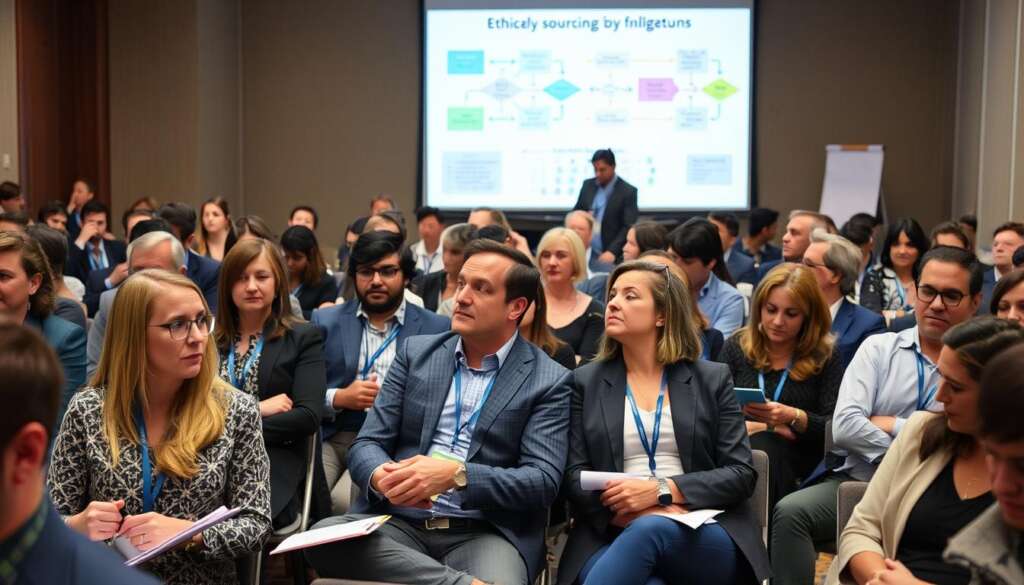
I realized something important: the metaphysical side of the industry rarely participates in these conversations about ethical sourcing. While jewelry companies were beginning to address these issues, the crystal healing community remained largely disconnected from these efforts.
Someone from the metaphysical community needed to be a voice on this topic. For me personally, it became clear: either follow this road further into ethical sourcing or quit the business altogether. There was no middle ground that would allow me to stay true to myself.
Finding Renewed Purpose
I left that conversation feeling grounded again – happy and confident in my new direction. The next day, I returned to the show with a clearer perspective. My shopping list remained focused, but my mission had expanded.
I would still bring home beautiful treasures for my customers, but I would also return more educated and connected to the ethical sourcing movement. I had a strong feeling that interesting adventures were on the horizon – ones that would allow me to make a real difference.
The challenges of ethical sourcing in the gemstone industry are significant, but they’re not insurmountable. By asking questions, building relationships with ethical suppliers, and educating both myself and my customers, I could be part of the solution rather than abandoning the field to those who don’t care.
This journey has taught me that ethical sourcing isn’t about perfection – it’s about commitment to improvement. It’s about asking difficult questions, being willing to hear uncomfortable answers, and making conscious choices based on the best information available.
Practical Steps Toward Ethical Sourcing
Through my experience and subsequent research, I’ve identified several practical steps that anyone in the gemstone industry can take to move toward more ethical practices:
- Ask specific questions about origin and mining conditions
- Build relationships with suppliers who prioritize transparency
- Educate customers about the importance of ethical sourcing
- Support initiatives that improve conditions for miners
- Be willing to pay more for ethically sourced materials
- Share information with others in the industry
These steps aren’t always easy, and they often require difficult conversations. But each question asked and each ethical purchase made helps move the entire industry in a better direction.
Challenges in the Gemstone Industry
The gemstone industry faces several significant challenges when it comes to ethical sourcing:
Supply Chain Complexity
Most gemstones pass through 10-15 different hands before reaching a jewelry designer. This complex chain makes traceability extremely difficult without dedicated systems in place.
Lack of Regulation
Unlike diamonds, which have the Kimberley Process (despite its limitations), colored gemstones have few international regulations governing their extraction and trade.
Artisanal Mining Conditions
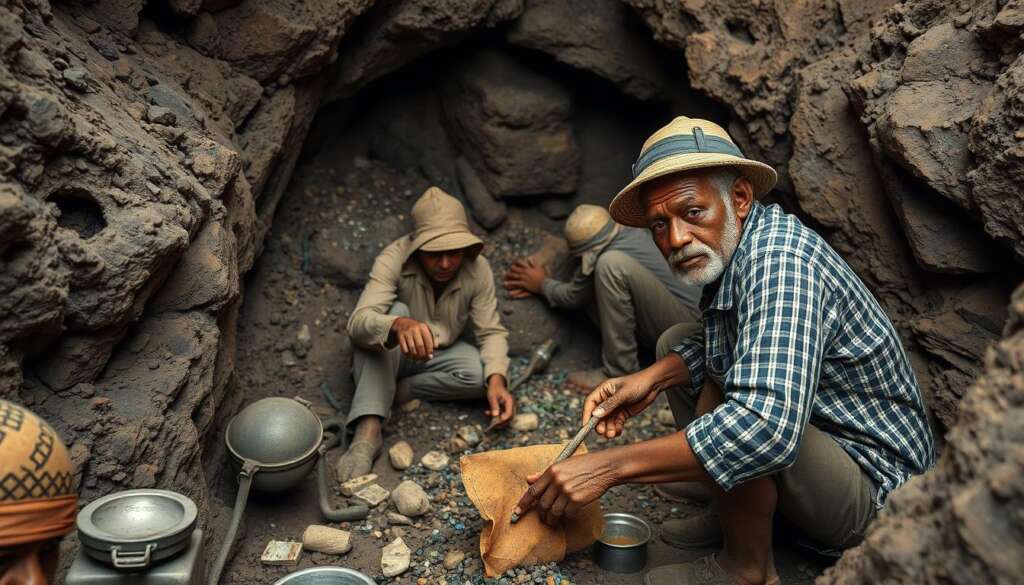
Approximately 70-80% of colored gemstones come from small-scale, artisanal mines where working conditions and environmental practices vary dramatically.
Consumer Awareness
Many consumers remain unaware of the ethical issues in gemstone sourcing or don’t know how to identify truly ethical products.
Despite these challenges, progress is being made. Organizations like the Responsible Jewellery Council, Ethical Metalsmiths, and initiatives like Moyo Gems are creating pathways toward more ethical practices throughout the industry.
Ethical Alternatives in the Gemstone Market
For those committed to ethical sourcing in the gemstone industry, several alternatives exist:
Mine-to-Market Gemstones
These fully traceable stones come with documentation of their journey from specific mines through cutting and polishing to the final seller.
Recycled Gemstones
Stones recovered from vintage jewelry and repurposed for new designs eliminate the need for additional mining while preserving the beauty of natural gems.
Lab-Created Alternatives
While not perfect (energy use remains a concern), lab-created stones eliminate the social and environmental impacts of mining altogether.
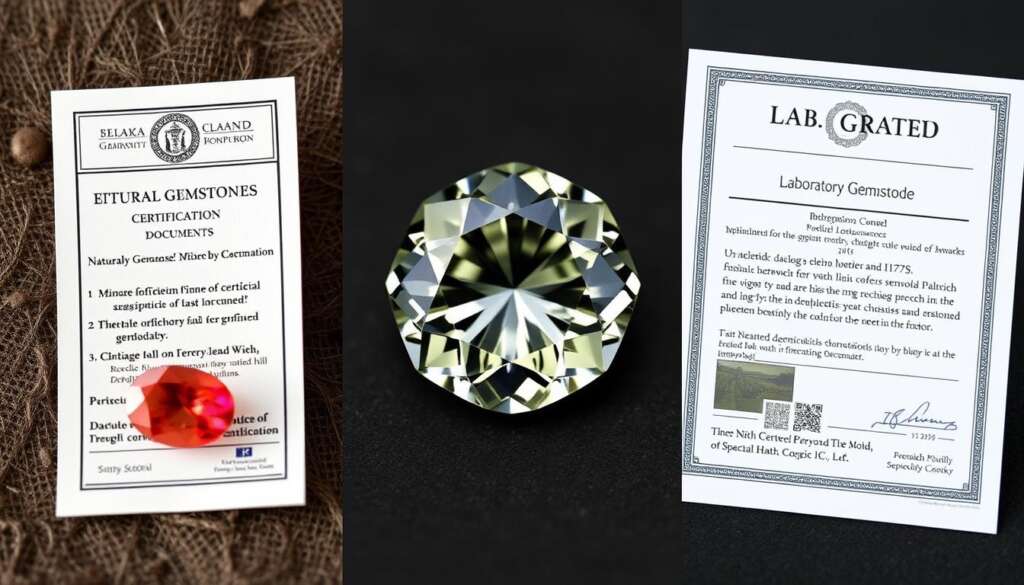
Each of these options represents a step toward more ethical practices, though none is perfect. The key is transparency – knowing exactly what you’re getting and making informed choices based on your values.
The Power of Consumer Choice
As consumers, we have tremendous power to shape the gemstone industry through our purchasing decisions. Every time we ask questions about sourcing or choose ethically sourced products, we send a message to the industry about our priorities.
By demanding transparency and ethical practices, we create market incentives for businesses to improve their sourcing. This consumer-driven change has already begun to transform parts of the industry, particularly in fine jewelry, though much work remains to be done in the crystal and healing stone market.
“We, the gem-obsessed, have so much power to improve conditions for everyone. If we demand more transparency and better conditions for miners, the industry will make it happen.”
This isn’t just about feeling good about our purchases – it’s about creating real, positive change for mining communities and the environment. Our choices matter.
My Ongoing Commitment
Since that pivotal day at the Tucson Gem Show, I’ve deepened my commitment to ethical sourcing in several ways:
- Building direct relationships with miners and cutting houses
- Documenting and sharing the origins of each stone I sell
- Educating customers about the importance of ethical sourcing
- Participating in industry initiatives to improve standards
- Being willing to stock fewer items if they can’t be sourced ethically
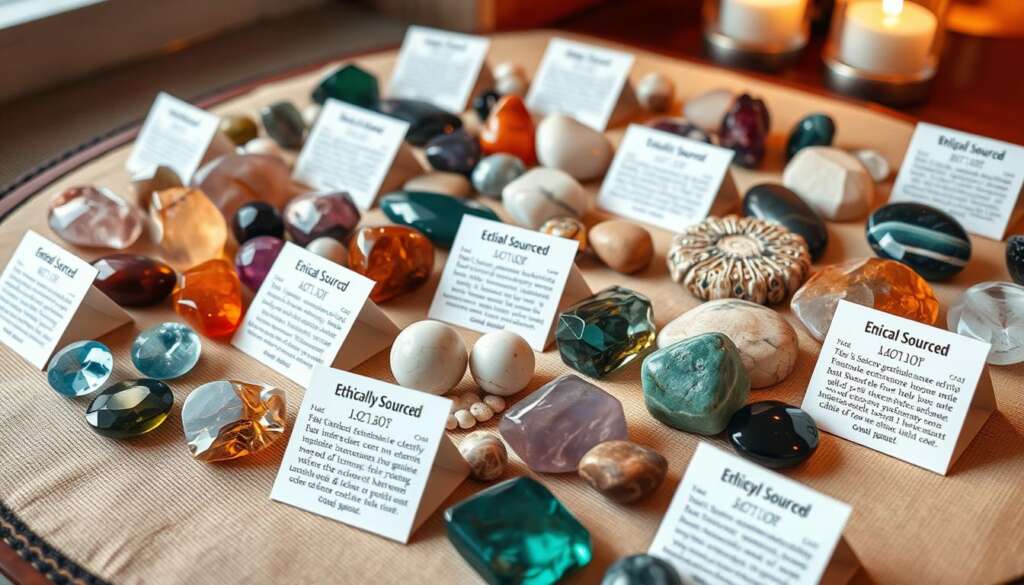
This path isn’t always easy or profitable in the short term. Sometimes it means saying no to beautiful stones with questionable origins. Sometimes it means paying more to ensure fair wages for miners. But it’s the only path that aligns with my values and allows me to sleep well at night.
The Journey Continues
That day when I almost quit my business became a turning point rather than an ending. By facing the difficult realities of the gemstone industry head-on, I found a deeper purpose and a community of like-minded individuals working toward positive change.
The path of ethical sourcing in the gemstone industry isn’t straightforward or perfect. It’s a journey of continuous learning, questioning, and improvement. As Brian wisely said, we simply “do the best we can” with the information and resources available to us.
I’m grateful to still be on this journey, and I invite you to join me in asking questions, demanding transparency, and making conscious choices about the crystals and gemstones in your life.
Find Out What Happened Next
I wrote two more articles about my experience shopping at the Tucson Gem Show in 2019. These can be found in Walking the Talk (Part 1) and (Part 2).
A few days later I attended my first ethical sourcing conference, the Jewelry Industry Summit, and wrote about my experience including a flash of insight.
Leave a Comment